

How to Read a Nutrition Label Correctly
A plain-language walk through serving size, calories, percent Daily Value and added sugars, based on U.S. Food and Drug Administration guidance.
Learning how to read a nutrition label correctly starts with recognizing that the Nutrition Facts label on packaged foods and beverages works best as a comparison tool rather than a verdict on any single food. The U.S. Food and Drug Administration (FDA) describes the label as a daily tool for making informed food choices, and its layout moves from serving size and calories at the top to individual nutrients and a percent Daily Value (%DV) further down. Knowing what each section means, and the order in which to look at them, can help shoppers avoid common misreadings, such as treating a single serving as the contents of an entire package or mistaking a high percentage for a good one when the nutrient is one to limit.
Start With Serving Size and Servings Per Container
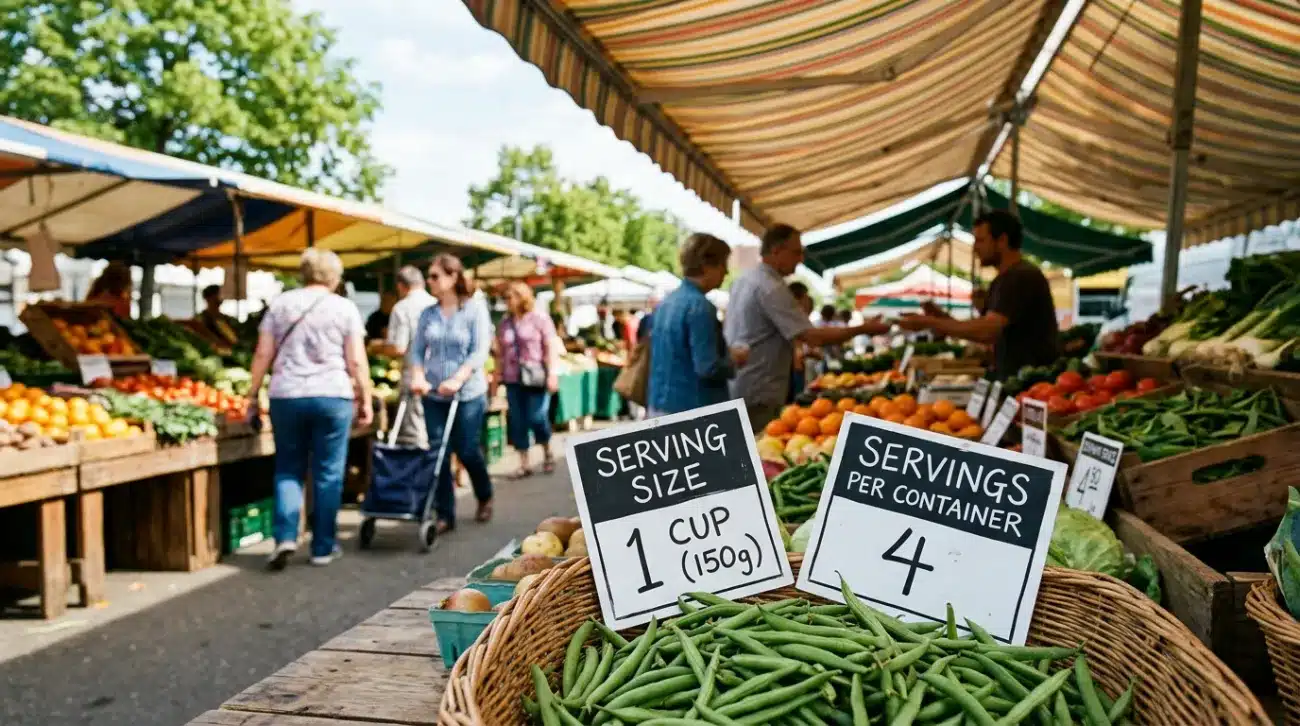
The FDA advises that the first things to check on the Nutrition Facts label are the number of servings in the package, listed as servings per container, and the serving size. These two lines set the scale for every other number on the label. Servings per container shows the total number of servings in the entire package, and the agency points out that a single package of food may contain more than one serving.
Serving size is where many misunderstandings begin. According to FDA consumer material, it is based on the amount of food that is typically eaten at one time, and it is not a recommendation of how much to eat or drink. The nutrition information on the label is usually given for one serving, although the FDA notes that some containers also display information for the whole package. The arithmetic is simple but easy to overlook: if a package contains two servings and a person eats all of it, the calories, nutrient amounts and percent Daily Values listed for one serving each need to be doubled.
The FDA also updated some serving sizes to better reflect the amounts people typically eat and drink, and on the current label servings per container and serving size appear in large, bold type.
Calories on the Nutrition Facts Label in Context
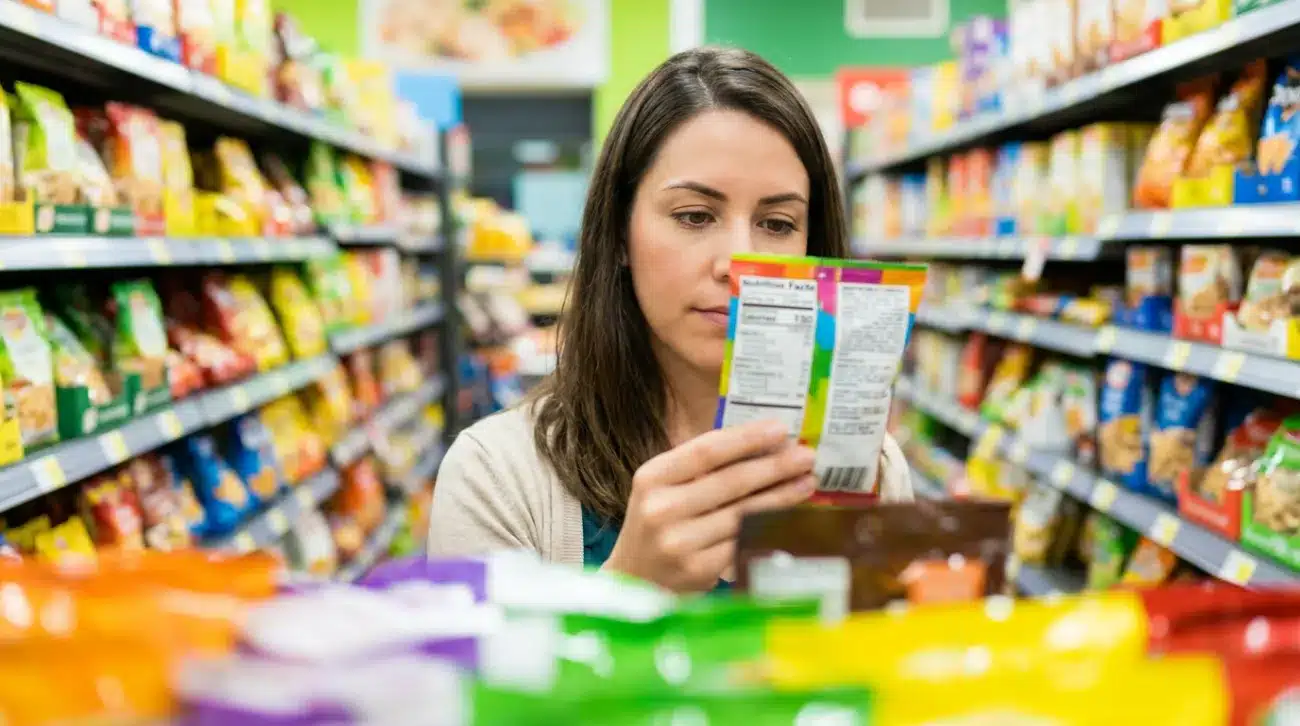
Directly beneath the serving information is the calorie count, which the FDA describes as the total number of calories in a serving of the food. Calories are also displayed in large, bold type on the current label. The agency’s guidance on calories is framed around balance: to achieve or maintain a healthy body weight, it advises matching the calories eaten and drunk with the calories the body uses.
Because the calorie figure applies to one serving, it describes what a person consumes only once serving size is taken into account. The footnote at the bottom of the label also plays a role here, since the FDA says it gives the number of calories used for general nutrition advice. FoodLabelMaker, a labeling-compliance resource, states that %DV is calculated using a 2,000-calorie daily diet, which it describes as the FDA’s general guideline for nutrition labeling.
Understanding Percent Daily Value and the 5/20 Guide

The percent Daily Value is the percentage of the Daily Value for a nutrient that one serving of the food provides. The FDA says %DV can tell a shopper whether a serving is high or low in a nutrient and whether it contributes a lot or a little to the total daily diet. The agency offers a straightforward rule of thumb: 5% DV or less of a nutrient per serving is considered low, and 20% DV or more per serving is considered high.
The FDA illustrates the rule using a sample label, in which one serving lists 37% DV for sodium. That figure is above the 20% threshold, so the agency describes the sample product as high in sodium. The percentage itself can be calculated, and FoodLabelMaker gives the formula as the amount of a nutrient per serving divided by its Daily Value, multiplied by 100.
Nutrients to Limit: Saturated Fat, Sodium and Added Sugars

The meaning of a high or low percentage depends on the nutrient. The FDA identifies saturated fat, sodium and added sugars as nutrients to get less of, and it advises comparing and choosing foods so that daily intake of these nutrients stays under 100% DV. For these, the Daily Value works as an upper limit. The FDA explains that an upper limit means a person should stay below, or eat less than, the listed amount each day.
The agency’s reference table lists 20 grams of saturated fat and 2,300 milligrams of sodium as equal to 100% DV, each with the qualifier “less than.” In practice, that means a 20% DV for sodium in one serving accounts for a fifth of the daily upper limit from that serving alone.
Total Sugars Versus Added Sugars on the Nutrition Facts Label

Sugar is one of the most frequently misread lines. Total Sugars on the label includes sugars naturally present in many nutritious foods and beverages, such as the sugar in milk and fruit, as well as any added sugars in the product. The FDA notes that Total Sugars does not carry a %DV, and neither does trans fat.
To separate the two, the current label lists Added Sugars on its own line, in grams and as a percent Daily Value. Food Technology magazine, published by the Institute of Food Technologists, reported that added sugars are declared directly under total sugars in the form “Includes X g Added Sugars.” An FDA fact sheet says added sugars include those added during processing, sugars from syrups and honey, and sugars from concentrated fruit or vegetable juices. It explains that they were added to the label because consuming too much can make it hard to meet nutrient needs while staying within calorie limits. At the same time, the FDA has stated that it recognizes added sugars can be part of a healthy dietary pattern.
There are exceptions in how the declaration appears. For honey, maple syrup and other single-ingredient sugars or syrups, as well as certain cranberry products, the FDA says packages are not required to state the grams of added sugars in a serving, but they must still show the percent Daily Value for added sugars.
Key takeaway
Check the serving size first, multiply if you will eat more than one serving, and then use the 5% and 20% guide to judge each nutrient. A high %DV is a reason to look more closely at saturated fat, sodium and added sugars, and a low one is generally more welcome for those same nutrients.


