Contents
Red Giant: The Aging Star

As the star burns through its fuel, it will eventually run out of hydrogen in its core. At this point, the core will contract and heat up, causing the star’s outer layers to expand and cool down. The star has now entered the red giant phase of its life.
Red giants are much larger than main sequence stars and are often several hundred times larger than the Sun. They are also much cooler, with temperatures around 3,000 degrees Celsius. During this phase, the star will continue to burn hydrogen in a shell around its core while helium is fused into carbon and oxygen in the core.
Planetary Nebula: The Death Of A Star
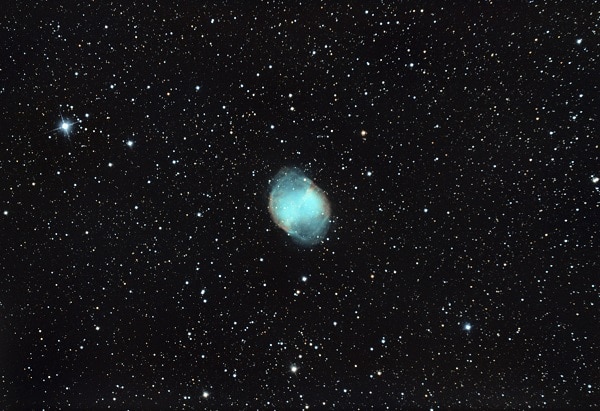
Eventually, the red giant will run out of fuel, and its outer layers will be ejected into space, leaving behind a small, dense core known as a white dwarf. The ejected material will form a beautiful cloud of gas and dust called a planetary nebula.
White dwarfs are incredibly dense, with a mass similar to the Sun but a size similar to Earth’s. They are also incredibly hot, with temperatures in excess of 100,000 degrees Celsius. Over time, white dwarfs will cool down and eventually become black dwarfs, but this process takes billions of years.
Supernova: The Explosive Death Of Massive Stars

The death process is much more dramatic for stars that are much more massive than the Sun. Once they run out of fuel in their cores, they will begin to fuse heavier elements, eventually forming iron. Unlike other elements, a fusion of iron requires energy rather than releasing it, so the core is no longer able to support itself against gravity. The core will collapse, causing a massive explosion known as a supernova.
Supernovae are incredibly powerful and can outshine entire galaxies for brief periods of time. They are also responsible for producing many of the heavy elements found in the universe, including gold and platinum. The core of the star will either become a neutron star or a black hole, depending on its mass.
Did You Know About The Evolution Of Stars?
In conclusion, stars are born in giant clouds of gas and dust, and the forces of gravity and nuclear fusion drive their evolution. The main sequence stage is the longest stage in a star’s life, during which it fuses hydrogen into helium. As the star runs out of fuel, it enters the red giant phase, where its outer layers expand and cools down. Eventually, the star will shed its outer layers in a planetary nebula, leaving behind a white dwarf. For more massive stars, the death process is much more explosive, resulting in a supernova and the formation of a neutron star or black hole.
Stellar evolution is a fascinating and complex process that has shaped the universe as we know it. By studying the life cycles of stars, astronomers can learn about the history of the universe and the processes that drive it.